The White-Glove Treatment: Three UK Museums That Let Grown-Ups Handle the Goods
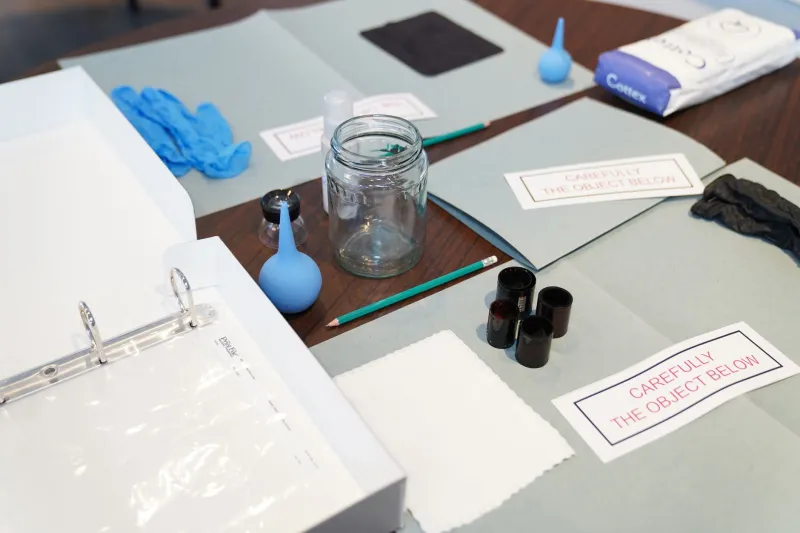
There is a particular museum sound: the squeak of a trainer on parquet, the hush of a gallery guard, and the words 'please don't touch' delivered with the warmth of a parking ticket. Fair enough. Collections are fragile. But the best museums know that looking is only half the job. Touching — carefully, with a curator hovering and a pair of white cotton gloves that make everyone look like a magician — changes the way you see. Weight, texture, temperature: these are facts a label cannot give you.
So here are three UK museums where adults get to handle the good stuff. Not in a furtive, behind-the-rope way. In a booked-in-advance, please-sign-here, now-feel-this way.
Wellcome Collection, London: the glass eye and the pill box
The Wellcome Collection has always been a bit of a maverick. It is the museum that will happily put a prosthetic limb next to a packet of antidepressants and ask you to think about what health actually feels like. Its adult handling sessions — usually tied to exhibitions and often announced at short notice — are the same: small, curious, and just slightly unsettling in the best way.
You might be handed a 19th-century glass eye. It is heavier than you expect. Colder, too. You might hold a vintage pill box and hear the rattle of a very specific kind of hope. The curator will tell you what the object is, but your hand will tell you what it meant. That is the trick. A glass eye in a case is a curiosity. A glass eye in your palm is a reminder that someone once had to learn to put it in.
Why does touching change how you look? Because it turns a specimen into a situation. You stop asking 'what is it?' and start asking 'who used it, and how did they feel about it?' The Wellcome's sessions are ticketed, small, and sell out faster than you would think. Check the what's-on page, book early, and do not turn up expecting to stroke the entire collection.
The Whitworth, Manchester: silk, synthetic, and the truth about texture
The Whitworth is a gallery that wears its collections lightly. It has a serious textile archive, a park outside, and a way of making you feel clever without making you feel stupid. Its handling sessions are the same: gloves on, sleeves up, and a conservator gently explaining why you cannot simply scrunch a 19th-century silk sample like it is a tea towel.
What is surprising here is the range. You might handle a fragment of William Morris wallpaper and feel the raised ink — the bit that photographs always flatten. You might compare a piece of historic silk with a 1970s synthetic and realise that 'textile' is not a category but a spectrum of behaviour. Some fabrics slump. Some spring. Some feel like they have been waiting 150 years for you to notice their weight.
The session is not a craft workshop. It is closer to a slow-looking class with a tactile twist. You will spend more time than you expect thinking about the difference between something that was made by hand and something that was made by a machine. And you will leave with a new respect for the phrase 'dry clean only'.
Pitt Rivers Museum, Oxford: the stone tool that fits your thumb
The Pitt Rivers is the museum that looks like a Victorian attic had a baby with a Cabinet of Curiosities. It is dense, dark, and full of objects that seem to have been arranged by a very enthusiastic magpie. Its handling sessions are a reminder that the museum has always been more touchy-feely than its glass cases suggest.
The surprise is not the shrunken heads (you will not be handling those, thank goodness). The surprise is the ordinary stuff: a stone tool, a piece of bark cloth, a Victorian toy. You put on gloves, you hold a hand axe that is hundreds of thousands of years old, and your thumb finds a groove that someone else's thumb wore smooth. That is not a history lesson. That is a handshake across time.
Why does it matter? Because touch collapses distance. A flint tool in a case is an artefact. A flint tool in your hand is a tool. You can feel how it would sit in your palm, how you would strike with it, how quickly you would tire. The Pitt Rivers sessions rotate, and some are adults-only, so check the listings before you turn up with a picnic and a sense of entitlement.
The small print, the white gloves, and the point of it all
These sessions are not a free-for-all. They are timed, ticketed, and supervised by people who know exactly how much hand cream you have on. They rotate, they pause for conservation reasons, and they sometimes sell out to people who read the what's-on page more diligently than you do. Book ahead. Wear something you can move in. And do not, under any circumstances, lick the artefacts.
But do go. Because the 'do not touch' rule is necessary, not natural. Museums are full of objects that were made to be held, worn, used, and dropped. A handling session gives you back a sense that history was not just looked at. It was gripped. And once you have felt the weight of a glass eye or the grain of a 19th-century silk, you will never look at a display case the same way again.