Chlorine’s Off, Look Up: Three UK Lidos Worth a November Architecture Walk
There is a particular kind of British optimism in a lido out of season. The water is off, the slides are silent, and somebody has inevitably left a stack of flipped plastic chairs looking like a small modernist sculpture. But strip away the sunscreen and the queue for chips, and what remains is often rather glorious: tilework, terraces, bold signage and changing rooms with more listed status than most stately homes.
So this November, treat a lido like a gallery with a puddle problem. You are not there to swim. You are there to look up, peer through railings and pretend you knew all along that the best bit was the architecture. In true 3-up form, here are three UK lidos that reward an off-season visit — plus three things to spot at each, so you can feel cultured while your fingers go numb.
Saltdean Lido, Brighton: The Art Deco Headliner
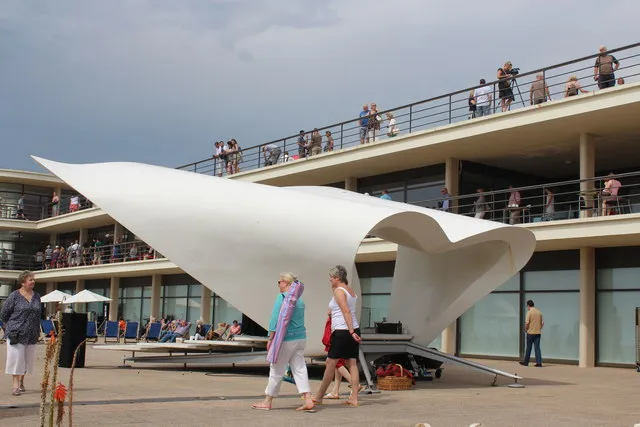
Saltdean is the lido that looks as if it should be on a poster for a glamorous 1930s seaside resort that never quite existed. Opened in 1938 and designed by R. W. H. Jones, it is a properly striking piece of Art Deco optimism: sweeping curves, crisp white walls and a main building that seems to be doing a theatrical bow towards the sea. It is Grade II* listed, which in listing terms is basically the National Trust tier of “please do not lean on that”.
Out of season, the pleasure is in the silhouette. The pool itself becomes a huge, empty geometry; the diving boards look like punctuation marks; and the surrounding terraces suddenly read as a stage set waiting for a very cold opera. The restoration story here is part of the appeal too — this is a place that has been lovingly dragged back from the brink rather than left to moulder behind a padlock.
Three things to look for
- The main façade: all curves and confidence, especially against a grey November sky.
- The signage and lettering: proper mid-century-style typography that makes a pool entrance feel like a cinema foyer.
- The pool basin geometry: with no water, you can actually appreciate the shape rather than just the shivering.
Check ahead for which outdoor areas are open, and do not turn up expecting a swim. This is a look-and-loiter mission. Bring a flask. Bring a coat. Bring the kind of person who says “ooh, look at that canopy” without irony.
Tinside Lido, Plymouth: Sea Views and Sharp Angles
Tinside is the lido equivalent of someone in a crisp white shirt at a party: impossible to ignore, slightly showy, and absolutely correct. Opened in 1935, it clings to Plymouth Hoe with views across Plymouth Sound, and its Art Deco lines feel almost nautical — as if the building itself has been streamlined for cutting through water. It is Grade II listed, and it earns every bit of that designation.
The joy of an off-season visit is that Tinside becomes less about changing-room logistics and more about the setting. You get the terraces, the curves, the white-rendered walls and that faintly absurd sense that a municipal swimming pool has been allowed to pose like an ocean liner. When the water is off, the whole thing reads as architecture first, leisure second — which is exactly the sort of inverted logic this website enjoys.
Three things to look for
- The terraced sunbathing decks: built for lounging, but even better for a bracing November circuit.
- The curved pool edge and sea backdrop: a reminder that a lido can be a viewing platform as much as a bath.
- The white, ship-like detailing: railings, canopies and clean lines that make the whole place feel permanently ready to set sail.
It is worth checking access to the pool complex rather than assuming you can wander the lot; some areas may be closed for the season. The Hoe itself is free and reliably windy, so you can combine a lido façade fix with a seaside walk and a pasty. That is what we in the culture trade call a balanced programme.
Brockwell Lido, London: The Local Classic With a Serious Façade
Brockwell Lido in Herne Hill is the sort of place that Londoners describe as “a gem” while secretly guarding it like a sourdough starter. Opened in 1938, it is Grade II listed, and its main building has that reassuringly solid 1930s municipal confidence: symmetrical, brick-and-render, with a central entrance that makes going for a swim feel faintly official.
In summer, the lido is all noise and sunburn and people negotiating loungers like diplomats. In November, it becomes a much quieter architecture trail. The empty pool is a great big rectangular void, which sounds bleak but is actually rather compelling — you can read the bones of the place. The changing rooms, café building and entrance all contribute to a site that feels like a proper piece of social history rather than a mere leisure facility.
Three things to look for
- The central entrance block: modest but mighty, with the kind of proportions that make you want to straighten your coat.
- The pool surround and terraces: the real shape of the lido, without the inflatables and the shrieking.
- The listed-building details: windows, signage and brickwork that tell you this was designed to last, not to be replaced by a block of flats with a “wellness” concierge.
Brockwell Park itself is a fine companion for a November walk, and the surrounding Herne Hill area has enough cafés to reward your commitment to outdoor culture. As ever, check opening times and which parts of the lido are accessible out of season. Do not climb anything. Do not attempt a heroic dry dive. The architecture is the event.
The Off-Season Lido Rules
A few sensible notes for the culturally curious. First, lidos are not museums; they are working sites with maintenance schedules, fencing and the occasional bit of winter repairs. Check before you travel. Second, “free” usually means the public exterior and surrounding park, not necessarily the inner sanctum. Third, November light is your friend: low sun makes white walls glow and tilework look far more dramatic than it does in July glare.
And finally, embrace the oddity. A lido without water is a bit like a theatre without actors: you notice the structure, the paintwork and the ambitions of the people who built it. In a country that loves a municipal project almost as much as it loves complaining about the weather, that is a genuinely good day out. Chlorine’s off. The architecture is very much on.