Clock Off, Culture On: Three UK Galleries for a 45-Minute Hit
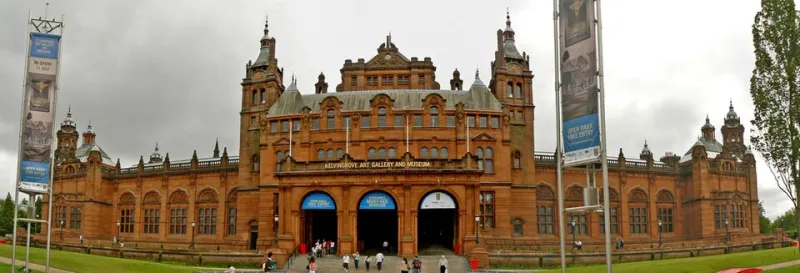
Photo: Zhi Yong Lee from Glasgow, UK, CC BY 2.0, via Wikimedia Commons
Lunch breaks are a tricky bit of British admin. Forty-five minutes is too short for a full museum slog and too long for another sandwich eaten while pretending to read a work document. The answer is not to power-walk every gallery in the building. It is to pick one room, hunt down one object, and finish with one coffee that does not taste of despair.
This is the 45-minute museum method: no audio guide queue, no gift shop guilt, no calf ache. Just a concentrated hit of culture that leaves you wanting more rather than checking your watch. Here are three UK galleries that reward the tight visit.
The Wallace Collection, London: one room, one smirk
The Wallace Collection is a blissful sort of museum: free, compact, and stuffed with things that make you go oh, that is famous, then. Do not attempt the whole house. Head straight for the Great Gallery on the first floor. It is the big, red-walled room with the kind of paintings that make you stand up straighter without quite knowing why.
The single object to seek out is Frans Hals's The Laughing Cavalier. He is not actually laughing, which is part of the fun. He is smirking at you from 1624 like he knows you have a meeting at two. Stand in front of him for a minute, admire the lace, and do not try to work out what the embroidery means. It is enough that he looks pleased with himself.
The 45-minute route is simple: enter, go upstairs, find the Great Gallery, find the Cavalier, allow yourself one lap of the room, then leave before you start reading every label. The coffee stop is Monocle Café on Chiltern Street, a short stroll away. It is small, polished and close enough that your lunch break remains a lunch break rather than a sponsored walk.
No-calf-ache promise: the Wallace is bijou by national-museum standards. You will not accidentally end up in a wing devoted to 18th-century snuff boxes unless you choose to.
The Ashmolean, Oxford: one jewel, no odyssey
Oxford museums can tempt you into a full day of gentle intellectual showing off. Resist. The Ashmolean is vast, but the 45-minute visitor can beat it by aiming for Room 40, the gallery covering England from 400 to 1600. It is the sort of room where history stops being a timeline and starts being a series of very expensive objects with excellent backstories.
The object to find is the Alfred Jewel. It is a small, enamel-and-gold thing that looks like a posh tea strainer and has been causing scholarly arguments for centuries. It is associated with King Alfred, it is beautiful, and it is exactly the sort of item that makes you say imagine losing that in the car park.
Give yourself ten minutes with the jewel, ten minutes circling the room, and then exit via the shop without buying a novelty quill. The coffee stop is Missing Bean on Turl Street, a proper Oxford caffeine stop with enough character to make you feel like you have had a small sabbatical.
No-calf-ache promise: one room, one object, one coffee. You will leave with the smug glow of someone who has done culture efficiently, not the thousand-yard stare of someone who has read every information panel about medieval buckles.
National Museum of Scotland, Edinburgh: one sheep, no marathon
Edinburgh's National Museum of Scotland is a brilliant, sprawling beast, which is exactly why it needs treating with discipline. Do not start at the beginning. Do not try to see the whole building. Make for the Science and Technology galleries and find Dolly the Sheep, the world's most famous cloned sheep and a genuine piece of late-20th-century history.
Dolly is a strange and wonderful object: a museum specimen that somehow still feels like a personality. She is also a useful reminder that not all culture has to be marble and oil paint. Sometimes it is a sheep in a glass case, and that is fine.
Once you have paid your respects, allow yourself one quick loop of the surrounding galleries, then escape before the museum's many floors start whispering just one more exhibit. The coffee stop is Brew Lab on South College Street, a short walk away and a reliable source of flat whites that taste like they were made by someone with a beard and strong opinions.
No-calf-ache promise: the route is targeted, the object is memorable, and the coffee is close. You will not spend 45 minutes lost in a labyrinth of taxidermy.
The rules of the 45-minute museum
First, pick your room before you go in. Wandering is lovely, but wandering is not lunch-break culture. Second, choose one object and give it your full attention. Three objects in 45 minutes is just scrolling with extra steps. Third, leave while you are still enjoying yourself. The best museum visits end with a small, pleasant ache of curiosity, not a desperate need to sit down in a corridor.
And finally, treat the coffee stop as part of the culture, not a consolation prize. A good gallery lunch break should feel like a tiny, civilised rebellion against the working day. One room, one object, one flat white, and back at your desk before anyone notices you have been quietly improved by art.